Decolonial Dienstag - A series of projects on the present state of society and possible futures
Under the title Decolonial Dienstag: A series of projects on the present state of society and possible futures, based on the colonial history of Fredenbaum Park, Theater im Depot 2024 has initiated an in-depth examination of a colonial heritage in Dortmund that has received little attention to date.
From 1884 onwards, Fredenbaumpark was the central venue for colonial exhibitions and so-called human zoos for several decades – a place where people, mostly from outside Europe, were put on display in a racist manner in the context of historical colonialism.
The (regional and local) occasion:
Human zoos in Fredenbaumpark
In connection with European colonialism, events and exhibitions were held in European cities in which people from other parts of the world were staged and exhibited by Europeans in so-called ‘human zoos’. In Germany, such exhibitions took place almost everywhere. This was also the case in the Ruhr area, especially in Duisburg, Essen and Dortmund, particularly in Fredenbaumpark.
Fredenbaumpark is located at the northern end of Nordstadt. The park was built and opened at the end of the 19th century and is now a landscape park, which took on its current form in the 1950s. From 1912 onwards, the park was dominated by the so-called Lunapark, an amusement park with which Dortmund attempted to emulate Vienna's Prater or Berlin's Lunapark.
The so-called ‘human zoos’ became popular in Germany in parallel with the expanding colonialism of the German Empire and were, in particular, an instrument for popularising and justifying colonial policy and its further development.
The Fredenbaum's human zoo programme included groups touring Europe, such as those organised by Hamburg impresario Carl Hagenbeck, as well as local events organised by local showmen. Today, however, there is little left to remind us of the history of the park in the north of Dortmund.
What role did human zoos play?
Various complex historical themes are intertwined in the historical human zoos. The shows were part of a leisure culture that developed in the second half of the 19th century, primarily among the new social class of factory workers. Ultimately, however, they were visited and viewed by people from all social classes. In contrast to the education-oriented leisure culture of the bourgeoisie (theatre, museums, libraries, etc.), a working-class leisure culture developed that was geared towards pleasure and entertainment on the one hand and – supposedly scientifically based – knowledge transfer on the other (variety shows, panoramas, showmanship, and later cinema and amusement parks, etc.). The exoticising displays of people from other parts of the world served, among other things, to promote the social integration of this new social class. By presenting a multitude of images of European others, the manifestation of a superior, white European culture was promoted.
The white viewers of the exhibits could also forget their own social differences for a moment and feel united as viewers in a supposed superiority, while those being viewed were assigned to a lower hierarchical level of human development. Many of the shows pretended to impart knowledge about other parts of the world and the people living there. Research on ‘physiognomy’ and ‘intelligence’ etc. was also repeatedly carried out on the exhibits on site. In conjunction with publications, (often fictitious) travelogues and the mass use of images of these others in contemporary German and European advertising, images of white cultural and evolutionary supremacy and a natural understanding of the legitimacy of European-white economic, political, cultural and military expansion under the banner of modernism and progress.
Project context Decolonial Dienstag
Under the title „Decolonial Dienstag“, we have launched a series of public and semi-public events featuring readings, workshops, excursions, and discussions that deal with this history and, in particular, the history of the human zoos in Fredenbaumpark. The participation of attendees is a fundamental aspect of this collaboration.
Förderer
Der Fredenbaumpark - Programm 2024: gefördert durch den Diversitätsfonds des Ministeriums Kunst und Wissenschaft des Landes Nordrhein Westfalen, das Kulturbüro der Stadt Dortmund und Fonds Soziokultur.
Pluriversen lokal 2025: gefördert durch Interkultur Ruhr – Kultur der Vielfalt, dem NRW LAndesbüro freie Darstellende Künste, sowie einer Projektförderung des Kulturbüros der Stadt Dortmund.
Decolonial Dienstag – Heimatlabor Fredenbaum #1: Decolonial Dienstag – Heimatlabor Fredenbaum #1: gefördert vom NRW Landesbüro Freie Darstellende Künste (LFDK) mit Mitteln des Ministeriums für Kultur und Wissenschaft des Landes Nordrhein-Westfalen sowie im Rahmen des Programms KUNST.DIVERS des Kulturbüros Dortmund.
Decolonial Dienstag – Heimatlabor Fredenbaum #2: gefördert durch die LAG Soziokultur NRW aus Mitteln des Landes Nordrhein-Westfalen und durch die Bezirksvertretung Innenstadt-Nord Dortmund.



Programme for the
2024/2025 season
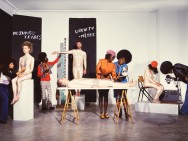
Muzungu Tribes / Teddy Mazina: Exhibition in A29
Workshop and Lecture by Cuso Ehrlich »Colonism, our city and we«
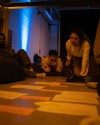
Workshop »Dekolonialer Webstuhl« by Svenja Wolff & Aziza Bouizedkane
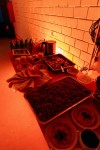
Open Decks / Open Space: Exchange, reading Group, Food & Music
Excursion Arnheim for the Performance »No More White Money«
Lecture Aylin Oğuş »Colonism and our bodies«
Reading Session withj Yacouba Coulibaly
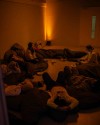
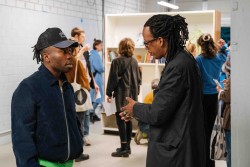
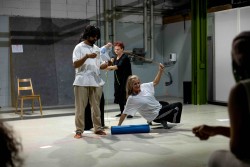
Programme for the
2025/2025 season
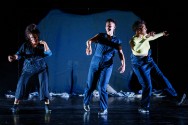
weekly, open Dance Training by & with Emmanuel Edoror
Exhibition- and Theatrevisits
Archive Group with Fidel Amoussou-Moderan (Decolonize Dortmund)
Film- and Videogroup by Sören Meffert
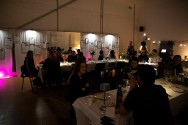
Dinner for ALL - performative Dinner
Abschlussveranstaltung mit Performance der Projektgruppe Tanz/Performance
○
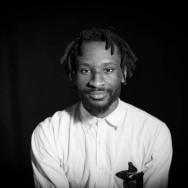
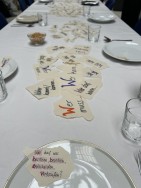
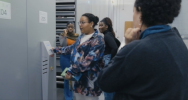
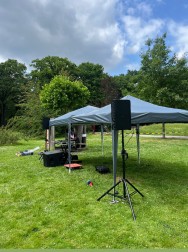
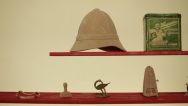
Workshop, der sich mit der deutschen Kolonialgeschichte und ihren anhaltenden Auswirkungen auf die Gegenwart beschäftigt
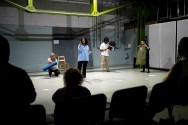
Workshop zur postkolonialen Spurensuche